Net-Zero Commercial Towers: Integrating Energy and Aesthetics
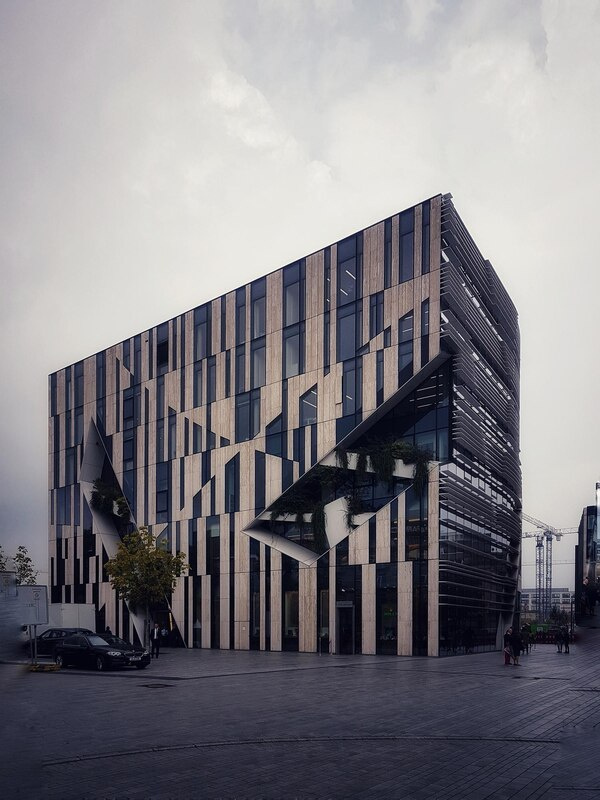
Net-zero commercial towers are reshaping how cities think about both energy and identity. Instead of treating sustainability as an invisible layer of engineering, the most compelling projects fuse performance and aesthetics into a single architectural idea. The result is not just lower emissions, but new urban landmarks that signal a different kind of prosperity.
From “Efficient” to Net-Zero
Conventional “green” office buildings typically aim to reduce energy use relative to a baseline. Net-zero towers go further: over the course of a year, they produce as much energy as they consume, usually through on-site and nearby renewable generation.
Achieving this in a tall commercial building is uniquely challenging:
- High internal loads from lighting, equipment, and data infrastructure
- Deep floor plates that limit daylight penetration
- Limited roof area relative to the building’s floor area
- Stringent comfort and reliability expectations from tenants
This makes pure add‑on technologies insufficient. The building’s form, façade, and systems must be conceived together as an energy ecosystem.
Form as an Energy Strategy
Net-zero design begins with massing and orientation. At the scale of towers, even small geometric changes can bring major performance gains.
- Orientation and profile
Aligning the longest façades to favor passive solar benefits—maximizing winter sun and minimizing summer heat gain—reduces mechanical demand. Slight rotation, setbacks, or twisting can optimize solar exposure for integrated photovoltaics while improving views and wind behavior.
- Aerodynamic shaping
Rounded corners, setbacks, and tuned tapering can reduce wind loads and vortex shedding. This lowers structural material demand and sometimes enables the use of building-integrated wind turbines in predictable flow zones without excessive noise or vibration.
- Terraces and sky courts
Outdoor terraces carved into the massing serve double duty. They bring daylight deeper into the floor plate, provide pressure-relief zones that improve natural ventilation strategies, and create high-value shared spaces that enhance the building’s public image.
Well-resolved forms often read as sculptural or iconic, yet their geometry is a direct response to climate, sun path, and wind behavior.
The Façade as Energy Device and Urban Face
For net-zero towers, the façade is no longer a passive wrapper. It is a finely tuned environmental interface and an urban-scale visual statement.
High-Performance Enclosures
Key principles include:
- Continuous insulation and low thermal bridging to reduce heating and cooling loads.
- High-performance glazing with selective coatings that admit visible light while blocking a large portion of solar infrared.
- Dynamic shading—external louvers, perforated “second skins,” or electrochromic glass—to modulate solar gain throughout the day and year.
These measures are calibrated to the specific microclimate. The pattern of shading fins or the depth of vertical mullions can be adjusted façade by façade, producing a subtle but legible visual rhythm.
Building-Integrated Photovoltaics (BIPV)
Rooftops alone rarely provide enough surface area to power a commercial tower. Thus, façades increasingly host photovoltaic systems.
- PV glass and spandrels
Semi‑transparent PV laminates, colored PV spandrel panels, and PV-clad parapets turn vast vertical surfaces into energy harvesters. Panels can be patterned to create gradients, bands, or pixelated effects that read as intentional design rather than technical afterthought.
- Articulation through energy logic
Tilting or folding façade panels to optimize incident solar angles yields a faceted or pleated appearance. Parametric optimization of these angles can be mapped directly into the architectural expression, creating a façade that looks dynamic because it is literally shaped by solar performance targets.
- Nighttime identity
Integrated LED layers behind PV modules or within shading elements can be powered by the building’s own generation. The tower’s night lighting then becomes a subtle visualization of its energy autonomy, reinforcing its identity in the skyline.
When carefully detailed, BIPV and shading systems support a cohesive design language: repetition and variation, light and shadow, opacity and transparency, all derived from energy performance criteria.
Interior Planning and Comfort
Net-zero towers must remain commercially attractive: high leasable efficiency, flexible fit‑outs, and premium comfort. Energy strategies can strengthen, rather than compromise, these goals.
- Daylight-driven space planning
Perimeter zones are reserved for primary workspaces, with glazing proportions, sill heights, and shading designed to maximize useful daylight while controlling glare. Service cores and auxiliary spaces occupy the deepest interior zones.
- Mixed-mode ventilation
In suitable climates, operable windows and ventilated double-skin façades allow natural or hybrid ventilation during shoulder seasons. This provides occupants with control and sensory connection to the exterior, reducing reliance on mechanical systems and improving perceived comfort.
- Thermal zoning and smart control
High-resolution zoning, occupancy-based controls, and adaptive setpoints minimize energy while recognizing diverse comfort preferences across tenants. Subtle design integrations—acoustic treatments, light shelves, radiant panels—ensure that energy savings are not achieved at the expense of acoustic or visual quality.
By anchoring planning choices in daylight, air quality, and thermal comfort, energy efficiency becomes an outcome of better workspace design rather than a constraint.
Structural Efficiency and Embodied Carbon
While “net-zero” usually refers to operational energy, tall commercial buildings increasingly address embodied carbon, which is heavily driven by structural systems.
- Material optimization
High-strength steels, performance-based design, and advanced analysis reduce unnecessary mass. Structural grids coordinated with planning and service runs minimize waste and enable flexible leasing strategies.
- Hybrid systems
Composite timber–concrete floors, steel–timber hybrids, and lower-carbon concretes cut embodied emissions. Exposed structural elements can become core components of the architectural language, with expressed diagrids, mega-braces, or timber frames giving the tower a distinctive character.
- Integration with energy systems
Structural slabs can host radiant heating and cooling loops that operate at higher efficiency than conventional air-based systems. Thermal mass in exposed concrete or engineered stone moderates temperature swings, smoothing the building’s energy profile.
Making structure legible not only reduces redundant finishes but also celebrates the building’s material honesty, aligning aesthetics with resource-conscious design.
Renewable Systems and Urban Energy Networks
For tall commercial buildings, net-zero rarely happens in isolation. Urban context and infrastructure are decisive.
On-Site and Near-Site Generation
- Rooftop and podium PV
Maximized use of roofs, podiums, canopies, and adjacent low-rise structures for photovoltaics helps close the energy gap. Architecturally integrated canopies over plazas or transit entrances can serve as both shelter and generation.
- Geothermal and geoexchange
Borehole fields beneath the tower or in nearby public space can support high-efficiency heat pumps. Visible expression of these systems—interpretive displays, exposed plantrooms, or glazed mechanical floors—can become part of the tower’s narrative.
- Urban district systems
Connection to nearby waste-heat sources, district cooling, or shared energy storage allows a tower to function within a broader net-zero or net-positive district. Its façade may communicate this connectivity through subtle lighting cues or media facades tied to real-time performance data.
Storage and Demand Management
- Battery systems offset renewable intermittency and allow time-shifting of loads, while also providing backup power for critical functions.
- Thermal storage—such as chilled water tanks or phase-change materials integrated into ceilings or partitions—reduces peak electrical demand.
The visible and invisible layers of infrastructure become part of the building’s identity as a civic energy asset, not just a private commercial facility.
Aesthetics Informed by Performance
A core shift in design thinking is to treat performance data—solar gain, daylight autonomy, wind pressure, and thermal comfort—not as constraints to be minimized but as generative tools for composition.
- Parametric design workflows allow designers to iterate façade patterns, massing strategies, and shading geometries that respond quantitatively to climate while producing visually coherent forms.
- Material palette choices—glass coatings, ceramic frits, perforated metals, terracotta, photovoltaics in different colors and textures—are curated so that performance-driven elements read as intentional and legible design decisions.
- Nighttime expression integrates efficient lighting with the building’s energy logic, minimizing light pollution while giving the tower a clear presence in the skyline.
In the strongest examples, observers cannot easily separate “the sustainable features” from “the architecture”; they are simply experiencing a building whose beauty emerges from how skillfully it mediates light, heat, air, and energy.
Human and Urban Dimensions
Net-zero commercial towers play a symbolic and practical role in cities:
- Public interface
Active ground floors, shaded plazas, and accessible lobbies can host exhibitions about the building’s systems and performance. This transforms the tower into a public-facing demonstration of low-carbon living rather than a closed corporate object.
- Well-being and productivity
High indoor air quality, views, biophilic elements, and acoustic comfort support occupant health and effectiveness. Companies increasingly recognize that these factors influence retention and brand perception, aligning commercial interests with sustainable design.
- Urban legibility
As more towers pursue net-zero performance, their presence will reframe public expectations of what a “premium” office building looks like: daylighted, nuanced, materially expressive, and visibly tuned to its climate.
Pathways Forward
Net-zero commercial towers are still at the leading edge of practice, but the enabling ingredients are rapidly maturing:
- Increasingly stringent codes and carbon disclosure requirements
- Falling costs and expanding aesthetics of photovoltaics
- More powerful, accessible simulation and optimization tools
- Tenants and investors demanding credible ESG performance
The challenge for designers is to integrate these drivers without defaulting to purely technological expression. The most valuable towers for cities will be those in which energy, comfort, and character are inseparably intertwined: forms shaped by climate, façades that harvest and filter light, structures that economize materials, and public realms that communicate environmental responsibility as a shared cultural value.
In that future, net-zero commercial towers will not be niche experiments, but the new normal for how cities grow—places where energy performance and architectural expression reinforce, rather than compromise, one another.